• Skip to primary navigation
  • Skip to main content
  • Skip to primary sidebar

HVS

Helium Leak Detection

MENUMENU
  • 570-676-9417
  • Quick RFQ

Uncategorized

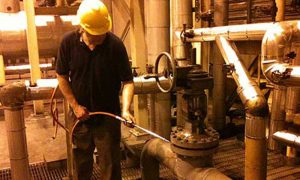
Leak Testing Refineries and Process Plants

September 15, 2018 by HVS

Reduce Emissions and Save Money

Leaking equipment such as valves, pumps and connectors are the largest source of emissions from refineries and chemical manufacturing facilities. An average refinery or chemical plant can have 150 to 46,000 valves and 600 to 60, 000 connectors—and can emit over 700 tons of volatile organic compounds each year from valves, connectors, pumps, compressors, and pressure-relief devices.

In refineries and petrochemical plants, saleable products are lost wherever emissions escape from process equipment. Lost Product=Lost Revenue. In 1992, the EPA estimated that product lost due to equipment leaks was $1,370 per ton. Or over $730,000 per year for each facility. And that’s figured in 1992 dollars! If you factor in 20 years of price inflation, a good leak detection and repair program can save your facility plenty by reducing lost product.

By implementing a leak detection and repair program with scheduled leak testing of all equipment components at regular intervals, you can run your facility more efficiently, minimize expensive down time and generate cost savings by reducing lost product. And by reducing emissions and VOCs and VHAPs, you can avoid emission fees, enforcement actions and regulatory penalties.

With monthly or quarterly monitoring programs Refineries can reduce their emissions from equipment leaks by up to 63%. And Chemical Plants can reduce VOC emissions by 56%.

Our experienced leak detection technicians can help keep your facility online and running efficiently.

Request More Information
Filed Under: Uncategorized

Leak Testing Equipment Components

September 15, 2018 by HVS

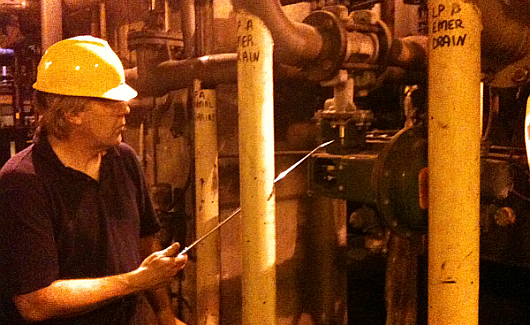
Helium Leak Testing Onsite
The standards for leak detection vary by component type, service (light/heavy liquid, gas, vapor), and monitoring interval.  Leaks can be detected by visual inspections, such as: dripping fluids, spraying, misting or clouding around components. Or other observations such as sound (hissing) or smell.

The benefit of using a highly sensitive Helium Leak Detector is that leaks can be detected into the minus ten range, long before they become large enough to see, hear or smell.

These are some of the main sources of equipment leaks in refineries, petrochemical and chemical processing facilities.

Top Sources of Equipment Leaks:

  • Pumps – leaks in pumps typically occur at the seals.
  • Valves – leaks are found in the stem or gland of the valve body, and are usually caused by problems with the valve packing or O-ring.
  • Connectors (Flanges & Fittings) – leaks are caused by failed gaskets and poorly torqued bolts on flanges.
  • Sampling Connections – leaks usually are found at the outlet of sampling valve.
  • Compressors – leak are frequently due to failure of the seals.
  • Pressure Relief Valves – leaks can occur at the seals from wear or damage, an improperly seated valve, or a ruptured disk gasket.
  • Open-ended Lines – leaks tend to occur at the point of the line where it is open to the atmosphere and are caused by poorly implemented block or plug.

Our experienced leak detection technicians can help keep your facility online and running efficiently.

Filed Under: Uncategorized

Primary Sidebar

Rental Forms & Warranty

Rental Form

Download our leased equipment terms and conditions.

Warranty

Download our warranty on rebuilt and used leak detectors.

RMA Form

Download our RMA form.

Resources

Unit Conversion Tool

Calculate Flowrate, Leakrate, Pressure & Volume.

Quick RFQ

Quick RFQ

Target Services

  • LINAC Leak Testing
  • Condenser Leak Testing
  • Turbine Leak Testing
  • Pipeline Leak Testing
  • Vacuum Furnace Leak Testing
  • Lyophilizer Leak Testing
  • Leak Detector Rentals
  • Leak Detector Repairs

Helium Leak Detectors

  • Adixen Leak Detectors
  • Alcatel Leak Detectors
  • Agilent Leak Detectors
  • Edwards Leak Detectors
  • Leybold Leak Detectors
  • Pfeiffer Leak Detectors
  • Varian Leak Detectors
  • VEECO/VIC Leak Detectors

© 2026 Siteby DMR